Designing High-Performance Database Schemas
By Oleksandr Andrushchenko — Published on
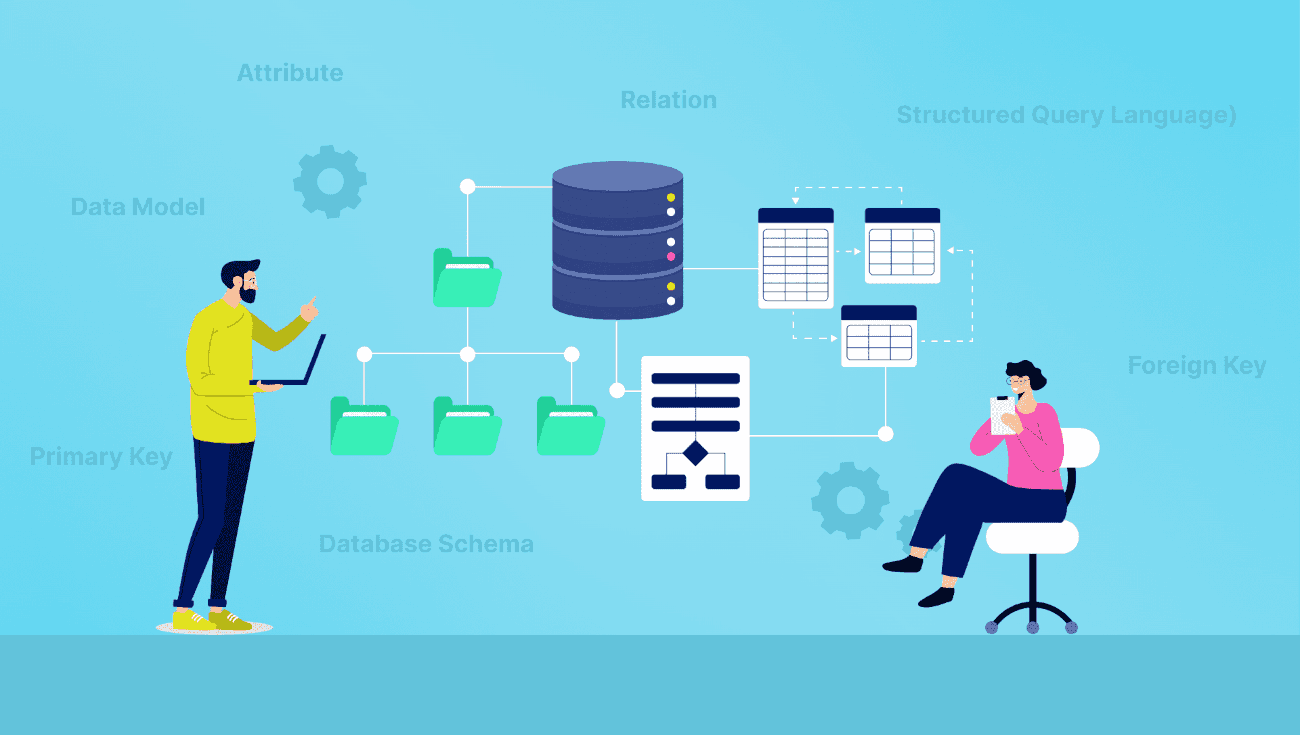
A high-performance database schema reduces the amount of work required to answer common queries while preserving data integrity and supporting safe application changes. Performance comes from aligning tables, relationships, constraints, indexes, and data types with actual production access patterns.
Schema design should not optimize only for storage normalization or one benchmark query. A production schema must balance read latency, write cost, concurrency, operational simplicity, migration safety, and long-term growth.
Table of Contents
- Schema Design Starts with Access Patterns
- Normalization and Denormalization
- Keys, Data Types, and Constraints
- Index Design
- Relationships and Query Shapes
- Write Performance and Concurrency
- Production Design Example
- Ready-to-Use Example
- Common Mistakes
- Production Readiness and Conclusion
Schema Design Starts with Access Patterns
A schema should be designed from the operations the application performs most frequently and the invariants the database must protect.
Important questions include:
- Which queries must remain below a strict latency target?
- Which columns appear together in filters and sorting?
- Which records are updated concurrently?
- Which relationships must be transactionally consistent?
- Which tables will grow fastest?
- Which queries are user-facing and which can run asynchronously?
Business operation:
  List one tenant's newest active shipments

Required query shape:
  tenant_id = ?
  status IN (...)
  ORDER BY created_at DESC
  LIMIT 50

Schema implications:
  tenant_id must be stored on shipment
  status must use a controlled representation
  ordering requires a deterministic tie-breaker
  index should match filter and sort order
Designing tables before documenting query shapes often produces schemas that are logically valid but operationally expensive.
Rule of Thumb: optimize the schema for the most important bounded queries, not for every theoretically possible query.
Normalization and Denormalization
Normalization reduces duplicated data and centralizes ownership. Denormalization stores derived or repeated values closer to the query path. Neither approach is universally faster.
Normalized Models
A normalized model stores one fact in one authoritative place and connects records through keys.
Advantages
- Lower update inconsistency: one value is changed in one location.
- Clear ownership: entities and relationships are explicit.
- Strong integrity: foreign keys and unique constraints protect relationships.
- Efficient writes: repeated descriptive values do not need mass updates.
Disadvantages
- More joins: common reads may require several tables.
- Higher query complexity: application queries and indexes become more involved.
- Potential fan-out: one entity can connect to many large child collections.
- Harder analytical reads: reporting often needs aggregation across several relations.
When to Use / Real-World Use Cases
Normalization is the default for transactional data such as customers, orders, payments, products, and user permissions where data integrity and independent updates matter.
Example
CREATE TABLE customers (
    id uuid PRIMARY KEY,
    email text NOT NULL UNIQUE,
    display_name text NOT NULL
);

CREATE TABLE orders (
    id uuid PRIMARY KEY,
    customer_id uuid NOT NULL
        REFERENCES customers(id),
    status text NOT NULL,
    created_at timestamptz NOT NULL DEFAULT now()
);
Denormalized Models
Denormalization duplicates selected data or stores precomputed values to remove expensive joins or aggregations from critical read paths.
Advantages
- Fewer joins: common responses can be loaded from one table or read model.
- Lower read latency: derived values are available without recalculation.
- Predictable query plans: fewer relationships are traversed.
- Good analytical fit: pre-aggregated data supports dashboards and summaries.
Disadvantages
- Consistency complexity: duplicated values must be updated correctly.
- Higher write amplification: one business change may update several rows.
- Stale projections: asynchronous read models may lag behind source data.
- More storage: repeated or derived values consume additional space.
When to Use / Real-World Use Cases
Denormalization is useful for product search, shipment dashboards, activity feeds, API response projections, counters, and frequently requested summaries.
Example
CREATE TABLE tenant_shipment_summaries (
    tenant_id uuid NOT NULL,
    shipment_id uuid NOT NULL,
    customer_name text NOT NULL,
    carrier_name text,
    current_status text NOT NULL,
    latest_event_at timestamptz,
    created_at timestamptz NOT NULL,
    PRIMARY KEY (
        tenant_id,
        shipment_id
    )
);
Choosing the Balance
Keep authoritative transactional state normalized. Add denormalized projections only when measured read cost or latency justifies the additional write and synchronization complexity.
| Property | Normalized Schema | Denormalized Schema |
|---|---|---|
| Data integrity | Strong and centralized. | Requires synchronization. |
| Read complexity | Often higher. | Often lower. |
| Write cost | Usually lower. | Higher due to duplicated updates. |
| Storage usage | Lower. | Higher. |
| Best fit | Transactional source of truth. | Read-heavy projections and analytics. |
Keys, Data Types, and Constraints
Keys, data types, and constraints affect index size, comparison cost, storage density, write behavior, and the database’s ability to reject invalid state.
Primary Key Design
Primary keys should be stable, immutable, and suitable for joins. Common choices include integers, UUIDs, ULIDs, and application-generated distributed identifiers.
| Key Type | Advantages | Disadvantages | Typical Use |
|---|---|---|---|
| Sequential integer | Compact and index-friendly. | Central generation and predictable values. | Single-database internal entities. |
| Random UUID | Distributed generation and global uniqueness. | Larger indexes and random insertion pattern. | Distributed APIs and public identifiers. |
| Time-ordered UUID or ULID | Distributed generation with better insertion locality. | More complex generation and semantics. | High-write distributed systems. |
| Natural key | Business meaning and direct uniqueness. | May change or become large. | Stable codes and externally assigned identifiers. |
A narrow surrogate primary key can coexist with a unique business key. This preserves efficient joins while enforcing domain uniqueness.
Data Type Selection
Use the narrowest type that accurately represents the domain without creating future overflow or conversion problems.
- Use integers for money stored in minor units when the currency model permits it.
- Use numeric types when exact fractional precision is required.
- Use timestamptz for global timestamps.
- Use booleans only for true two-state values.
- Use controlled text or lookup tables for workflow states.
- Avoid storing structured queryable data in opaque text.
CREATE TABLE payments (
    id uuid PRIMARY KEY,
    amount_cents bigint NOT NULL
        CHECK (amount_cents > 0),
    currency char(3) NOT NULL,
    status text NOT NULL
        CHECK (
            status IN (
                'pending',
                'authorized',
                'captured',
                'failed',
                'refunded'
            )
        ),
    created_at timestamptz NOT NULL DEFAULT now()
);
Database-Enforced Integrity
Application validation improves error messages, but database constraints protect data under concurrency, background jobs, migrations, scripts, and application bugs.
- NOT NULL prevents incomplete records.
- UNIQUE protects business identity during races.
- FOREIGN KEY prevents invalid relationships.
- CHECK rejects impossible values.
- EXCLUSION constraints can prevent overlapping ranges.
Constraints reduce defensive application code and make invalid states impossible to commit.
Index Design
Indexes are derived data structures that accelerate reads while increasing storage, memory pressure, transaction-log generation, and write cost.
Index design should start with specific query shapes and measured execution plans.
Composite Indexes
A composite index should align with filtering, equality conditions, range conditions, and ordering.
-- Query:
SELECT
    id,
    status,
    created_at
FROM shipments
WHERE tenant_id = :tenant_id
  AND status = 'in_transit'
ORDER BY created_at DESC, id DESC
LIMIT 50;

-- Supporting index:
CREATE INDEX shipments_tenant_status_created_id_idx
ON shipments (
    tenant_id,
    status,
    created_at DESC,
    id DESC
);
Column order matters. Equality filters usually appear before range and ordering columns.
Covering and Partial Indexes
Covering indexes include additional selected columns so the database can answer some queries without reading the base table. Partial indexes store only rows matching an important condition.
-- Supports the active shipment queue while excluding completed history.
CREATE INDEX shipments_active_queue_idx
ON shipments (
    tenant_id,
    next_action_at,
    id
)
INCLUDE (
    status,
    carrier_id
)
WHERE status IN (
    'created',
    'booked',
    'in_transit',
    'exception'
);
Partial indexes are valuable when a small active subset receives most traffic.
Index Write Cost
Every inserted, deleted, or indexed-column update may modify several index structures.
One shipment insert:

1 table row
+ primary-key index
+ tenant/status index
+ customer index
+ active queue index
+ tracking reference index

More indexes:
  faster reads
  slower writes
  more storage
  more vacuum and maintenance work
Remove unused and overlapping indexes after validating production query statistics. An index that helps one rare query may increase cost for every write.
Relationships and Query Shapes
Relationships should preserve data integrity without encouraging unbounded joins or hidden query fan-out.
One-to-Many Relationships
Store the parent key on the child table and index it when the application frequently loads children by parent.
CREATE TABLE shipment_events (
    id uuid PRIMARY KEY,
    shipment_id uuid NOT NULL
        REFERENCES shipments(id)
        ON DELETE CASCADE,
    event_type text NOT NULL,
    occurred_at timestamptz NOT NULL,
    payload jsonb NOT NULL
);

CREATE INDEX shipment_events_shipment_time_idx
ON shipment_events (
    shipment_id,
    occurred_at DESC,
    id DESC
);
Child collections should always be paginated. One parent may accumulate millions of related records.
Many-to-Many Relationships
Use an explicit join table when the relationship has identity, metadata, permissions, status, or lifecycle.
CREATE TABLE user_organizations (
    user_id uuid NOT NULL
        REFERENCES users(id),
    organization_id uuid NOT NULL
        REFERENCES organizations(id),
    role text NOT NULL,
    created_at timestamptz NOT NULL DEFAULT now(),
    PRIMARY KEY (
        user_id,
        organization_id
    )
);

CREATE INDEX user_organizations_org_idx
ON user_organizations (
    organization_id,
    user_id
);
Bidirectional access commonly requires indexes beginning with each side of the relationship.
Avoiding Unbounded Joins
Joining several one-to-many relationships can multiply rows before aggregation.
1 order
x 20 order items
x 8 payments
x 30 shipment events
= 4,800 intermediate rows
Prefer separate bounded queries, lateral joins, pre-aggregated subqueries, or dedicated projections when one API response combines several large child collections.
Write Performance and Concurrency
High-performance schema design must protect write throughput and correctness under concurrent access, not only optimize reads.
Hot Rows and Contention
Frequently updating one row serializes transactions around that row’s lock and cache line.
Hot-row design:

tenant_usage
  tenant_id = one row
  request_count = request_count + 1

Thousands of concurrent requests:
  all update the same row
  lock waits increase
  throughput stops scaling
Mitigations include sharded counters, append-only event records, periodic aggregation, and moving non-critical metrics outside the transactional path.
Optimistic Concurrency
Version columns prevent lost updates without holding locks while the application performs external work.
UPDATE orders
SET
    status = :next_status,
    version = version + 1,
    updated_at = now()
WHERE id = :order_id
  AND version = :expected_version;
If no row is updated, another transaction modified the record and the caller should reload or reject the stale operation.
Append-Only Data
Audit records, ledgers, tracking events, and domain events often perform better and remain easier to reason about when stored as append-only facts.
- History is preserved.
- Concurrent writers touch different rows.
- Reconciliation becomes easier.
- Derived state can be rebuilt.
Append-only tables still require retention, partitioning, pagination, and controlled indexes as they grow.
Production Design Example
Consider a multi-tenant logistics platform that manages shipments, carrier bookings, tracking events, and operational exceptions.
Logistics Schema
tenants
  |
  +-- shipments
        |
        +-- shipment_packages
        |
        +-- shipment_events
        |
        +-- carrier_bookings
        |
        +-- shipment_exceptions

Authoritative transactional tables:
  normalized

Shipment dashboard:
  denormalized tenant_shipment_summaries projection

Tracking history:
  append-only and paginated
Every high-volume table contains tenant_id even when the tenant could be discovered through another join. This improves tenant-local indexing, authorization filters, future partitioning, and sharding options.
Critical Query Paths
- List active shipments by tenant: composite partial index by tenant, status, and next action time.
- Find shipment by tracking number: tenant-scoped unique lookup.
- Load tracking history: shipment-local keyset pagination.
- Reserve a workflow action: conditional update with version or locking.
- Render operations dashboard: denormalized summary projection.
Global analytics uses a separate warehouse rather than joining every transactional table on the primary database.
Failure and Growth Considerations
- Projection update fails: outbox event is retried and projection remains eventually consistent.
- Duplicate carrier webhook arrives: provider event ID has a unique constraint.
- Tracking events grow rapidly: table can be partitioned by time while queries remain shipment-local.
- One tenant becomes very large: tenant ownership allows future sharding or dedicated placement.
- Index build overloads production: indexes are created concurrently and monitored for replication lag.
- Schema deployment rolls back: expand-and-contract migrations preserve compatibility.
Ready-to-Use Example
The following PostgreSQL design supports tenant-local shipment queries, append-only tracking history, idempotent carrier events, and safe workflow updates.
PostgreSQL Schema
CREATE TABLE tenants (
    id uuid PRIMARY KEY,
    name text NOT NULL,
    created_at timestamptz NOT NULL DEFAULT now()
);

CREATE TABLE shipments (
    id uuid PRIMARY KEY,
    tenant_id uuid NOT NULL
        REFERENCES tenants(id),
    customer_reference text,
    tracking_number text,
    carrier_id uuid,
    status text NOT NULL
        CHECK (
            status IN (
                'created',
                'booked',
                'in_transit',
                'delivered',
                'exception',
                'canceled'
            )
        ),
    next_action_at timestamptz,
    version integer NOT NULL DEFAULT 1,
    created_at timestamptz NOT NULL DEFAULT now(),
    updated_at timestamptz NOT NULL DEFAULT now(),

    -- Tracking numbers need to be unique only inside one tenant
    -- because different carrier accounts may reuse the same format.
    UNIQUE (
        tenant_id,
        tracking_number
    )
);

CREATE TABLE shipment_events (
    id uuid PRIMARY KEY,
    tenant_id uuid NOT NULL,
    shipment_id uuid NOT NULL
        REFERENCES shipments(id)
        ON DELETE CASCADE,
    provider_event_id text,
    event_type text NOT NULL,
    occurred_at timestamptz NOT NULL,
    received_at timestamptz NOT NULL DEFAULT now(),
    payload jsonb NOT NULL,

    -- Protect webhook and broker retries from creating duplicate events.
    UNIQUE (
        tenant_id,
        provider_event_id
    )
);

CREATE TABLE tenant_shipment_summaries (
    tenant_id uuid NOT NULL,
    shipment_id uuid NOT NULL,
    tracking_number text,
    current_status text NOT NULL,
    carrier_name text,
    latest_event_at timestamptz,
    next_action_at timestamptz,
    created_at timestamptz NOT NULL,
    updated_at timestamptz NOT NULL,
    PRIMARY KEY (
        tenant_id,
        shipment_id
    )
);
Production Indexes
-- Supports newest-first tenant shipment history.
CREATE INDEX shipments_tenant_created_id_idx
ON shipments (
    tenant_id,
    created_at DESC,
    id DESC
);

-- Supports the operational queue without indexing completed shipments.
CREATE INDEX shipments_active_action_idx
ON shipments (
    tenant_id,
    next_action_at,
    id
)
INCLUDE (
    status,
    carrier_id,
    tracking_number
)
WHERE status IN (
    'created',
    'booked',
    'in_transit',
    'exception'
);

-- Supports keyset pagination of one shipment's event history.
CREATE INDEX shipment_events_shipment_time_id_idx
ON shipment_events (
    tenant_id,
    shipment_id,
    occurred_at DESC,
    id DESC
);

-- Supports dashboard filtering directly on the read projection.
CREATE INDEX tenant_shipment_summaries_status_action_idx
ON tenant_shipment_summaries (
    tenant_id,
    current_status,
    next_action_at,
    shipment_id
);
Safe Query Patterns
-- Reserve one due shipment for processing.
-- SKIP LOCKED allows several workers to claim different rows concurrently.
WITH candidate AS (
    SELECT id
    FROM shipments
    WHERE tenant_id = :tenant_id
      AND status IN ('created', 'exception')
      AND next_action_at <= now()
    ORDER BY next_action_at, id
    FOR UPDATE SKIP LOCKED
    LIMIT 1
)
UPDATE shipments
SET
    next_action_at = now() + interval '5 minutes',
    version = version + 1,
    updated_at = now()
WHERE id = (
    SELECT id
    FROM candidate
)
RETURNING
    id,
    status,
    version;
-- Load the next page of shipment events without a large OFFSET.
SELECT
id,
event_type,
occurred_at,
payload
FROM shipment_events
WHERE tenant_id = :tenant_id
AND shipment_id = :shipment_id
AND (
occurred_at < :cursor_occurred_at
OR (
occurred_at = :cursor_occurred_at
AND id < :cursor_id
)
)
ORDER BY
occurred_at DESC,
id DESC
LIMIT 51;Schema Monitoring
-- Find the largest tables and indexes.
SELECT
    relname AS relation_name,
    pg_size_pretty(
        pg_total_relation_size(relid)
    ) AS total_size,
    pg_size_pretty(
        pg_relation_size(relid)
    ) AS table_size,
    pg_size_pretty(
        pg_indexes_size(relid)
    ) AS index_size
FROM pg_catalog.pg_statio_user_tables
ORDER BY pg_total_relation_size(relid) DESC;


-- Identify indexes that receive little or no scan traffic.
-- Validate over a representative period before removing anything.
SELECT
    schemaname,
    relname AS table_name,
    indexrelname AS index_name,
    idx_scan,
    pg_size_pretty(
        pg_relation_size(indexrelid)
    ) AS index_size
FROM pg_stat_user_indexes
ORDER BY
    idx_scan ASC,
    pg_relation_size(indexrelid) DESC;


-- Find sequential scans on large tables.
SELECT
    relname AS table_name,
    seq_scan,
    seq_tup_read,
    idx_scan,
    n_live_tup
FROM pg_stat_user_tables
WHERE n_live_tup > 100000
ORDER BY seq_tup_read DESC;
Statistics should be evaluated together with query latency and execution plans. A low-scan index may still protect an infrequent but critical operational query.
Common Mistakes
Schema performance problems commonly result from optimizing one dimension while ignoring integrity, write behavior, or future growth.
| Mistake | Production Impact | Better Approach |
|---|---|---|
| Designing tables before documenting access patterns | Important queries require expensive joins, sorts, or scans. | Start with bounded production query shapes. |
| Fully normalizing every read path | Critical endpoints require deep join graphs. | Keep source data normalized and add measured projections. |
| Denormalizing without an update strategy | Duplicated values become inconsistent. | Define transactional updates, outbox events, or rebuildable projections. |
| Using text for every field | Larger storage, weak validation, and inefficient comparisons. | Use domain-appropriate types and constraints. |
| Relying only on application validation | Concurrency and scripts can commit invalid data. | Enforce invariants with database constraints. |
| Creating one index per column | Writes slow down while real multi-column queries remain inefficient. | Build indexes from complete filter and sort patterns. |
| Ignoring index column order | Indexes exist but cannot support the intended query efficiently. | Place equality filters before range and ordering columns. |
| Updating one global counter row | Row-lock contention limits throughput. | Use sharded counters, append-only events, or asynchronous aggregation. |
| Loading unbounded child collections | Response size and query latency grow without limit. | Paginate every potentially large relationship. |
| Using large OFFSET values | Later pages scan and discard increasing numbers of rows. | Use keyset pagination for large ordered datasets. |
| Storing queryable fields only in JSON | Validation and indexing become harder. | Use normal columns for stable frequently queried attributes. |
| Applying destructive schema changes in one deployment | Rolling application versions become incompatible. | Use expand-and-contract migrations. |
Production Readiness and Conclusion
Database schemas should evolve from measured production behavior. Query plans, table growth, index usage, write latency, lock contention, and migration duration should guide ongoing changes.
Production Checklist
- Document critical read and write paths before designing tables.
- Define latency and throughput targets for important queries.
- Keep authoritative transactional state normalized.
- Add denormalized projections only for measured read needs.
- Define how every projection is updated and rebuilt.
- Use stable immutable primary keys.
- Enforce business uniqueness with database constraints.
- Use foreign keys for relationships that require integrity.
- Choose accurate and appropriately sized data types.
- Store timestamps consistently with time-zone awareness.
- Design indexes from complete query shapes.
- Verify composite index column order.
- Use partial indexes for frequently accessed subsets.
- Use covering indexes only when measured benefits justify their size.
- Monitor index storage and write amplification.
- Review unused and overlapping indexes regularly.
- Paginate every unbounded collection.
- Use deterministic ordering with a unique tie-breaker.
- Use keyset pagination for large datasets.
- Avoid hot rows and global mutable counters.
- Use optimistic concurrency for stale-update protection.
- Prefer append-only records for ledgers, events, and audit history.
- Set statement and transaction timeouts.
- Monitor lock waits and long-running transactions.
- Monitor table, index, and transaction-log growth.
- Test query plans with production-scale data.
- Use backward-compatible expand-and-contract migrations.
- Backfill large datasets in bounded batches.
- Measure replication lag during schema changes.
- Design current schemas with future partitioning or sharding boundaries in mind.
Conclusion
High-performance schema design aligns database structure with production access patterns. Tables, keys, data types, constraints, relationships, and indexes should work together to minimize query cost while preserving correctness under concurrency.
Normalization protects transactional integrity, while selective denormalization improves critical read paths. Composite, partial, and covering indexes can reduce latency, but every index increases write and maintenance cost.
The strongest schemas make common operations local and bounded, reject invalid state at the database boundary, avoid hot rows, and remain compatible with safe migrations, partitioning, replication, and future sharding.
Key Takeaway: design schemas from real query and write patterns, enforce invariants in the database, and optimize only where measured production behavior justifies the additional complexity.
More Articles to Read
- Database Scaling Explained: Vertical vs Horizontal Scaling
- Replication and Read Replicas in Distributed Databases
- Database Sharding Strategies and Trade-Offs
- Partitioning Large Tables for Production Systems
- SQL vs NoSQL: Choosing the Right Database

Comments (0)